Why Are My Outlets Warm or Discolored? Read This First
Quick Answer: A warm or discolored outlet is a real warning sign, not a quirk. It almost always means electricity is meeting resistance somewhere behind the wall and turning into heat. A slightly warm dimmer or GFCI can be normal, but a standard outlet should stay cool. If the face is browned, scorched, or smells like hot plastic, stop using it, unplug what's in it, switch off that breaker, and call an electrician.
You reach behind the couch to unplug a lamp and notice the outlet feels warm against your fingers. Maybe the once-white face has gone faintly tan around one of the slots, or there's a gray smudge that wipes away but comes back. It's easy to shrug off. It's also one of the few things a home wall will tell you before it becomes a problem you can smell from the next room.
Heat at an outlet is worth paying attention to because outlets are not supposed to generate heat on their own. Understanding where that warmth comes from tells you how urgent the situation is and what needs to happen next.
What Warmth at an Outlet Actually Means
Electricity moving through a good connection barely warms it at all. Heat shows up when current runs into resistance, and resistance at an outlet almost always means one of two things: a connection that isn't tight, or a contact that's worn.
Think of it like a garden hose with a partial kink. The water still gets through, but the kink point takes all the strain, and if you held it, you'd feel it working. A loose or corroded electrical connection is the kink. Current squeezes through a smaller, poorer contact, and that spot heats up. Push more current through it, and it heats up more.
That's the whole mechanism. Everything below is a different reason the "kink" exists.
Loose or Backstabbed Connections
Most standard receptacles give an electrician two ways to attach the wires. The screws on the sides clamp the wire under a metal plate for a wide, solid contact. The holes on the back, called backstab or push-in terminals, let the wire be jammed into a spring clip for speed. That spring clip is a much smaller contact patch, and springs relax over time, especially after years of the wire warming and cooling.
When a backstabbed connection loosens, the contact area shrinks to almost nothing, resistance climbs, and the outlet warms up right at that terminal. This is one of the most common reasons a single outlet runs warm while everything around it stays cool. Moving that wire to the side screw usually solves it outright, which is exactly the kind of correction an electrician makes at the receptacle.
An Overloaded Circuit or a Hungry Appliance
Sometimes the outlet is fine, and the load is the problem. A space heater, a window air conditioner, a hair dryer, a microwave, a portable EV charger on a standard plug; these pull a lot of current, and they pull it continuously.
Most general-purpose outlets in a home sit on a 15-amp circuit; some kitchen, garage, and laundry circuits are 20-amp. A 1,500-watt space heater draws roughly 12.5 amps by itself, which leaves almost nothing on a 15-amp circuit for anything else sharing it. Run that for hours, and every connection along the circuit warms, the outlet included. If the outlet is only warm while the heavy appliance is running and cools off after you unplug it, the load is telling you it's near the limit of what that circuit was built to carry.
That doesn't automatically mean the wiring is bad. It can mean the appliance belongs on its own dedicated circuit, which is a common fix for repeat offenders.
Worn Contacts and a Loose Grip
Open an outlet's slots, and there are metal contacts inside that grip the blades of your plug. New, they hold firmly. After a decade or two of plugs going in and out, that grip weakens.
Here's the tell: plug something in and the plug sags or falls out under its own weight, or you can wiggle it and see the connection flicker. A loose grip means the blade and the contact touch only intermittently, and each tiny break is a small arc. Arcing is heat, and heat browns the plastic. A receptacle that no longer holds a plug snugly has reached the end of its service life and should be replaced, not just tolerated.
Aluminum Wiring in Older Homes
Homes wired in the mid-1960s through the 1970s were sometimes run with solid aluminum branch wiring instead of copper. Aluminum behaves differently at connections. It expands and contracts more with heat, it can loosen at terminals over time, and its surface forms an oxide layer that resists current, all of which raises resistance right where the wire meets the outlet.
In older coastal housing, this matters because those connection points are exactly where warmth and discoloration show up. Aluminum branch wiring is a recognized hazard, but it is not a do-it-yourself repair, nor is it a reason to panic. The accepted fixes involve proper connectors and methods, such as manufacturer-rated pigtail systems that bond a short length of copper to the aluminum at each device, work that should be assessed and performed by a qualified electrician. If your home is from that era and outlets run warm, having the wiring type identified is the right first step.
When Warm Is Normal, and When It Isn't
Not every warm device is a problem. A dimmer switch handling several bulbs converts a little energy to heat as part of how it works, so a dimmer that's mildly warm to the touch can be normal, especially on higher loads. Some GFCI outlets and USB charging receptacles also run slightly warm because electronics inside are working.
The line to hold onto: a plain outlet with nothing demanding plugged into it should be cool or close to it. Warmth on a standard receptacle, warmth you can feel through the faceplate, is not normal and should be looked at.
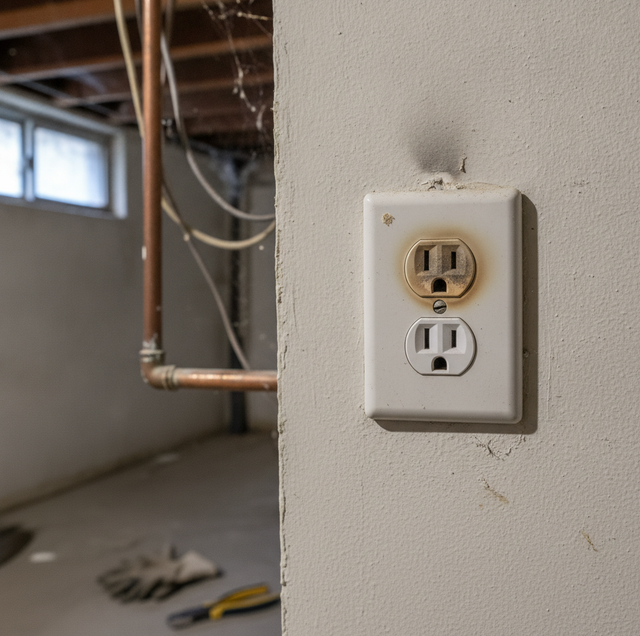
Discoloration is a different category. A browned, tan, or scorched face is not "running warm," it's evidence that heat or arcing has already happened there. The event may have passed, but the damage is a record of it, and the underlying cause, a loose terminal, a worn contact, or aluminum at the connection, is usually still present. Discoloration means the outlet gets inspected, not wiped off and forgotten.
Salt Air and Outdoor Outlets
Outdoor receptacles near the coast face something indoor ones don't. Salt-laden marine-layer air is corrosive, and it works its way into outdoor outlets, the metal contacts inside, and the connections behind them. Corrosion is just another form of resistance, and it builds slowly at exactly the points where current has to pass.
An exterior outlet that's discolored, sluggish to hold a plug, or warm has often been quietly corroding. Weather-resistant receptacles and proper in-use covers slow this down, but any outdoor outlet in a marine environment earns a closer look when it starts showing heat or staining.
Safe Checks You Can Do Yourself
You can learn a lot without opening anything or touching a wire. Keep it to what's on the outside of the wall:
- The touch test: With nothing heavy plugged in, is a standard outlet warm through the faceplate? It shouldn't be. Note which outlets are warm and which are cool.
- The plug-grip test: Does a plug hold firmly, or does it sag, wobble, or fall out? A loose grip points to worn internal contacts.
- The load test: Is the outlet warm only when a specific appliance runs, and does it cool down after you unplug that appliance? That points toward an overload rather than a bad outlet.
- The circuit test: When the warm outlet is under load, do lights elsewhere on the same circuit dim or flicker? That suggests the whole circuit is straining, not just one device.
- The smell and sight test: Any hot-plastic or fishy-burning smell, any buzzing or crackling from the outlet, any scorch marks, means stop.
What not to do: don't pull the receptacle out of the wall, don't remove the faceplate to poke around, and don't work on anything live. The diagnosis you can safely make is *what's happening*, not *why*, and the why is what a licensed electrician is for.
What to Do Right Now if an Outlet Is Hot or Smells
If an outlet is hot to the touch, smells like burning plastic, is buzzing, or shows scorch marks, treat it as active: unplug whatever is in it if you can do so safely, switch off the breaker feeding that circuit at the panel, and leave it off. Don't keep using it "just until it gets fixed." Then call an electrician. A scorched outlet is one of the few household warnings that actually precedes a fire, and it's cheap to take seriously.
Frequently Asked Questions
You don't need a thermometer, just a touch rule. Barely-there warmth on a dimmer or a charging brick is normal; anything you can't comfortably hold a fingertip against is not. As a rough guide, skin starts to register real discomfort somewhere around 110 to 120 degrees, so an outlet or plug that feels hot rather than mildly warm has crossed from normal into worth-acting-on. Where the heat sits matters too: a slightly warm faceplate around a dimmer is one thing, but hot plug prongs, or a cord that's hot right where it enters the plug, point to a failing connection at that exact spot, and that's the version to stop using.
When you switch off the breaker for a hot outlet, everything else on that circuit loses power too, since they share the same run back to the panel, so expect a few nearby outlets and lights to go dark with it. That's fine to live with until an electrician arrives. What you shouldn't do is run a heavy appliance through a long extension cord from another room to work around it, because that just shifts an overload onto a cord that isn't built for it. It also helps to know that outlets are often wired in a chain: a loose connection at one can overheat the ones fed after it, so the warm outlet you found may be failing at itself or at the outlet feeding it upstream, which is part of what an electrician traces before repairing.
Swapping the receptacle can hide the real issue rather than fix it. If the heat came from a loose terminal, aluminum wiring, or an overloaded circuit, a brand-new outlet on the same bad connection will warm up again, and aluminum in particular needs specific rated connectors that a hardware-store receptacle doesn't include. An electrician also confirms the circuit was truly de-energized before touching it and checks whether the wiring behind the outlet was damaged by the earlier heat, which you can't see from the face.
Homes built or rewired roughly between the mid-1960s and late 1970s are the ones to suspect. Sometimes the printing on the cable jacket in an attic or unfinished basement reads AL or aluminum, but the reliable answer comes from an electrician identifying it at the panel and at a device. It matters because aluminum loosens and oxidizes at connection points more than copper does, so the warmth tends to appear right at outlets and switches, and the correct repair is a rated remediation method, not a plain outlet swap.
Because the fault is usually local to that one device. A single loosened backstab terminal, one worn set of internal contacts, or one corroded connection concentrates the resistance, and with it the heat, at that spot while its neighbors on the same circuit stay cool. That's actually useful information: an isolated warm outlet points toward a bad connection or a tired receptacle at that location, whereas several warm outlets on one circuit point more toward an overload or a shared upstream problem.
Often not, and that's the trap. A standard breaker trips on total current or a dead short, so a high-resistance connection can quietly cook for a long time while staying under the breaker's threshold. This is the gap that arc-fault breakers, called AFCIs, are built to close: they watch for the electrical signature of arcing and loose connections and cut power when they detect it, which a regular breaker won't. If a circuit has warm or discolored outlets, one fix an electrician may recommend is arc-fault protection, so the next loose connection is caught rather than ignored.
Have a warm or discolored outlet checked before it becomes a hazard — a licensed electrician can find the loose connection or worn receptacle and make it safe. Ridgeline Electric serves Santa Cruz and the surrounding area. Call (831) 206-5602.
