You finally bought the car. The installer is standing in your garage, tape measure in hand, and asks one question that wasn't in any of the YouTube videos: "Hardwired, or plug-in?"
Most homeowners stall on this. It sounds like a small detail. The wire goes in either way. The charger works either way. But it changes the charge speed you can actually use, the warranty you'll hold, and what happens when the charger fails and needs to come off the wall.
Worth understanding before the installer drills the first hole. Here's what each option means, how the amperage math really works, and which setup tends to fit which kind of garage.
What "Hardwired" and "Plug-In" Actually Mean
Both setups start the same way. The electrician runs a dedicated 240-volt circuit from your main panel to the wall where the charger will live. That part doesn't change.
The fork is at the end of the wire.
A plug-in installation ends in a 240-volt receptacle — usually a NEMA 14-50, the same kind of outlet you'd find behind an electric range or a heavy dryer. The charger has a matching plug on the back. Plug it in. Mount the charger on the wall. Done.
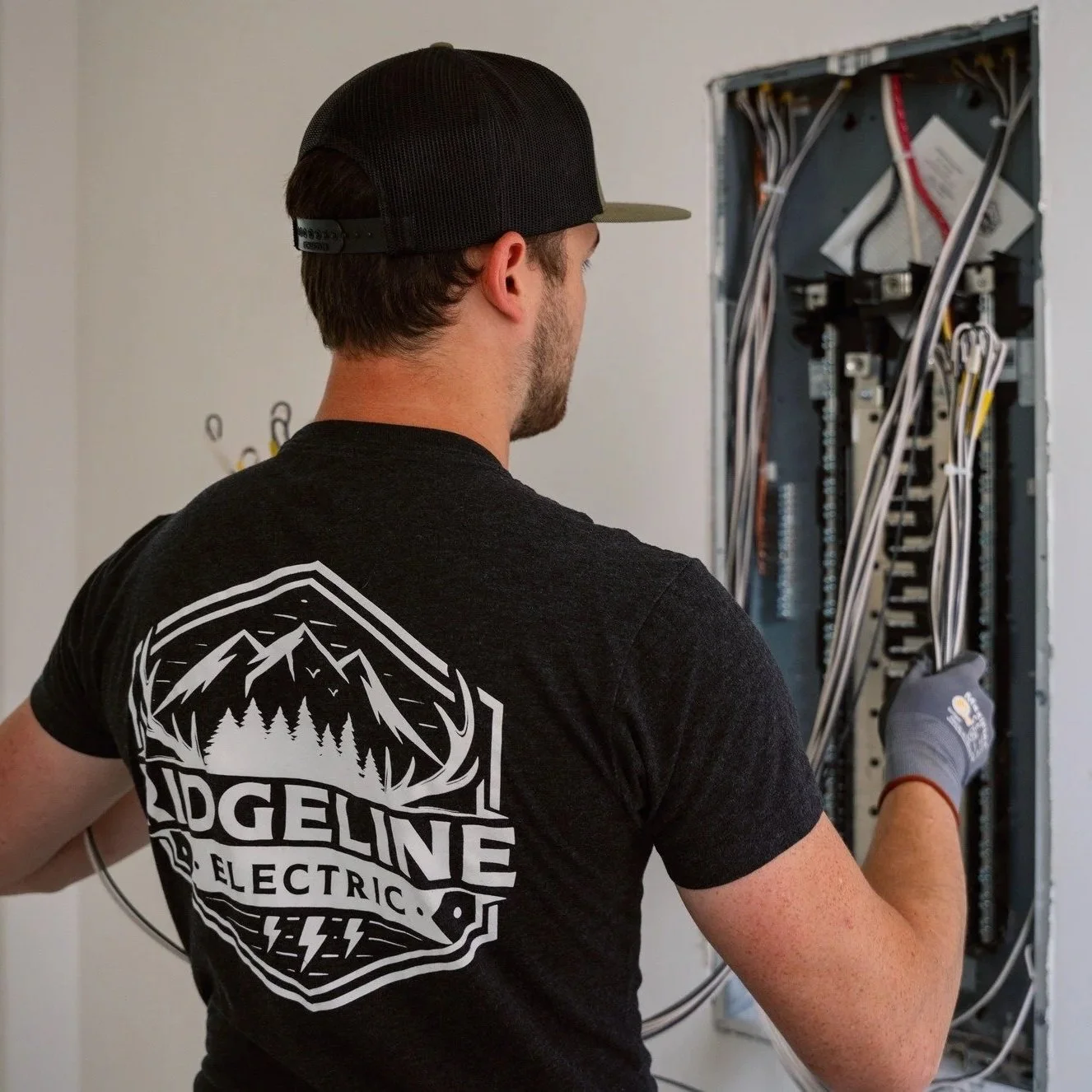
A hardwired installation skips the receptacle. The wire goes straight into the back of the charger and terminates on screw terminals inside. No plug. No socket. Nothing exposed. The unit becomes a permanent fixture, just like a furnace or a built-in microwave.
That single difference drives every trade-off below.
The Case for Hardwired
The biggest reason electricians prefer hardwired is amperage. Most 50-amp receptacles in homes are rated for 40 amps of continuous load. The reason: code treats anything running three hours or more as "continuous" and de-rates it to 80 percent of the breaker. An EV charger is continuous by definition — it's the textbook example. So a plug-in charger on a 50-amp outlet is realistically a 32-amp charger, no matter what the box on the side says.
Hardwired chargers don't have that ceiling. A 48-amp hardwired unit on a 60-amp circuit pulls the full 48 amps day in, day out. That's about 11.5 kilowatts going into the car, versus roughly 7.7 kilowatts on a typical plug-in. The difference shows up at the morning commute — about 35 to 40 miles of range per hour versus 25 to 30.
A few other quiet advantages add up:
Fewer connections to fail. Every plug-and-receptacle pair is a wear point. Hardwired chargers don't have one.
Cleaner outdoor installations. Plugs and weather don't mix well. A sealed hardwired unit handles a wet garage or an exterior wall with far less fuss than an outlet with a flap cover.
Required for the highest-amperage units. The biggest residential chargers on the market (60-amp circuit, 48-amp delivered) are hardwired-only. The manufacturers won't sell a plug-in version because the receptacle ratings don't support that draw safely.
The Case for Plug-In
But plug-in chargers exist for good reasons. The honest case is built around three things: flexibility, swap-ability, and matching what's already in the wall.
A plug-in charger comes off the wall in two minutes when you sell the house, move, or upgrade to a different brand. The receptacle stays — and the next homeowner can use it for whatever they want, including a different charger. If you're renting or planning a move in the next few years, that's worth real money.
And swap-ability matters more than people expect. If a hardwired charger fails out of warranty, the replacement is an electrician visit: turn off the breaker, disconnect, mount the new one, terminate, and test. A plug-in failure is a plug-in fix — unplug, mount, plug in, done. Some manufacturers also process warranty claims faster when the charger is shipped back directly rather than waiting for a tradesperson to uninstall it.
The last reason closes the most deals in older homes: there is already a heavy 240-volt outlet in the garage. Welders, RVs, and big shop tools have left NEMA 14-50 outlets sprinkled through American garages for decades. A plug-in charger just uses what's there.
Side-by-Side at a Glance
| Factor | Hardwired | Plug-In |
|---|---|---|
| Max practical amperage | Up to 48 amps on a 60-amp circuit | Capped near 32 amps on a 50-amp outlet |
| Real-world charge rate | ~35–40 miles per hour | ~25–30 miles per hour |
| Outdoor friendliness | Excellent in a sealed enclosure | Acceptable, but the receptacle is the weak point |
| Portability, if you move | Stays with the house | Comes off the wall in two minutes |
| Warranty swap | Electrician callback | Unplug-and-replace |
| Up-front install cost | Slightly higher | Slightly lower if you already have a 240-volt outlet |
| Best for | Long-term homeowners, daily commuters, higher-amp cars | Renters, low-mileage drivers, and garages with an existing dryer-style outlet |
Where the Amperage Math Actually Lands
The 80-percent rule is the single most misunderstood part of EV charger sizing. Worth slowing down on.
When current flows steadily for more than three hours, conductors and connections warm up in ways that brief loads never do. Codes account for this by rating any device that runs that long at 80 percent of the breaker. A 50-amp breaker protecting a stove that runs for 30 minutes at a time can carry the full 50 amps. The same 50-amp breaker for an EV charger must be treated as a 40-amp circuit.
So charger manufacturers comply by capping a plug-in charger at 40 amps on a 50-amp circuit. Some go further and cap at 32 amps to give themselves a margin on receptacle quality. Cheap 14-50 outlets have been involved in enough fires that the industry has stopped pretending they're all interchangeable.
A hardwired installation removes the receptacle from the equation. The electrician sizes the wire and the breaker for the unit's full rating, and the unit pulls its full rating. That's the real reason hardwired chargers are faster — not the technology in the box, but the circuit underneath.
The Receptacle Conversation Nobody Wants to Have
There's a real safety issue with cheap 240-volt receptacles being asked to handle continuous EV charging current. Industry committees have published warnings about it. Several charger manufacturers now ship hardwired-only or with higher-end industrial plugs because consumer-grade 14-50 receptacles have failed at unacceptable rates under continuous loads.
If you go plug-in, spend the extra on an industrial-grade receptacle — the kind rated for repeated heavy cycling. Your electrician will know which ones. A $12 hardware-store 14-50 and a $60 industrial unit look almost identical on the wall and behave very differently when an EV pulls 32 amps through them for six hours a night.
When Hardwired Is Almost Always the Right Call
A few situations push the answer toward hardwired without much debate.
You bought a 48-amp charger. It's hardwired-only. There is no plug-in version, on purpose.
The charger is going outdoors or in a damp space. A sealed hardwired enclosure handles the weather; a receptacle adds a failure point.
You drive a lot and want fast overnight charging. The higher the amperage, the faster it closes the gap between your morning departure and the percentage you need in the car.
A new home or renovation is already opening walls. The labor cost difference disappears when the walls are open.
A panel upgrade is happening anyway. If the electrical panel is being swapped, adding a permanent EV circuit is the cleanest time to do it.
When Plug-In Is the Better Fit
The reverse is also true. A few setups make plug-in the smarter call:
You're a renter or planning to move within a few years. You take the charger with you.
Your car accepts 32 amps or less from AC. Some plug-in hybrids and a few smaller EVs cap below 32 amps. Hardwired adds no value if the car can't use the extra.
There's a clean industrial-grade outlet already in place. Spending more to remove a perfectly good receptacle and hardwire is wasted money.
You want a brand-agnostic installation. Today's charger, tomorrow's charger, all on the same outlet.
What an Electrician Quote Should Cover, Either Way
Whichever route you pick, a fair quote spells out the same handful of items. Skim the line items before you sign:
The conductor size and run length from the panel to the charger location
The breaker amperage and type
A disconnect, if one is required by code at that distance from the panel
For plug-in: the make and rating of the receptacle (not just "NEMA 14-50")
Mounting hardware and any backer board for the charger
Permit and inspection
Hours of labor and a clear final price, not a range
Any contractor who waves off the receptacle brand or won't itemize the disconnect is leaving a corner-cutting opportunity in the quote. A licensed electrician handling EV charger installation should be able to walk you through every line.
A Note on Permits
EV charger installations are permitted electrical work in most jurisdictions. The permit covers the new circuit, the breaker, the disconnect (where required), and the final inspection. Skipping the permit is a short-term saving with two long tails. It can complicate a home sale years later. And it puts the homeowner — not the electrician — on the hook if anything goes wrong with the installation. The cost of the permit is small. Take it.
Frequently Asked Questions
In most cases, yes. The continuous-load rule caps the charger at 80 percent of the receptacle's rating, and almost all plug-in chargers ship configured to honor that limit at the factory. Some chargers let you dial the amperage in software, but raising it above 32 on a 14-50 outlet isn't something a reputable electrician will sign off on.
You can, but the receptacle the next homeowner would see has to be replaced with a junction box, and the wires terminated cleanly. Most sellers leave the charger in place and treat it as a selling point. A plug-in installation really does come with you in two minutes. A hardwired installation doesn't.
Not by as much as people assume. The wire run, the breaker, and the disconnect are the same either way. Hardwired skips the receptacle but adds a few extra minutes of termination labor. The difference is often under $100 on a typical residential installation. Sometimes, hardwired costs slightly less because the receptacle is removed from the bill.
For a plug-in installation, almost certainly yes. Codes now require GFCI protection on most 240-volt receptacles in garages and outdoor locations, and EV outlets are not exempt. For a hardwired installation, the answer depends on the charger — many newer units have GFCI protection built in, and a separate GFCI breaker would be redundant. An electrician will check the charger's listing and size the breaker accordingly.
Yes, within the limits of the circuit. If the original installation used wire sized for 48 amps but the breaker and charger were set lower, the electrician can swap the breaker and reconfigure the charger to deliver more current without re-running the wire. If the wire was sized for the smaller load, the run has to be re-pulled. Asking the installer to size the wire one step larger than the current charger is a small premium now that pays off if you upgrade later.
A single circuit can feed two cars two ways. The simpler way is one charger that load-balances between two ports. The other is two separate chargers that share a 60-amp circuit and split the available current. Both setups exist. The load-balancing models are usually cleaner and easier to inspect. Either way, a 60-amp circuit is hardwired-only territory.
What This Looks Like in a Real Garage
The decision usually settles itself when an electrician walks the garage. They look at the panel's spare capacity, the run distance to the charger location, whether the wall is shared with the outside, and whether the car can use the extra amperage.
A two-vehicle household with a long commute and a panel that has headroom for a 60-amp circuit gets a hardwired 48-amp unit. A renter with a low-mileage commute in a townhouse with an existing 14-50 in the garage gets a plug-in 32-amp unit on an industrial-grade receptacle. The math takes about ten minutes once the conditions are on the table.
