Aluminum Wiring Signs: Is It Still Safe in Your Home?
Quick Answer: Solid aluminum branch wiring from the mid-1960s to late 1970s is a real safety concern because the metal loosens at its connections over time and can overheat. You cannot make it safe by tightening screws yourself. The accepted repairs are COPALUM crimp connectors or AlumiConn connectors installed by a licensed electrician, or a full rewire. Warm outlets, flickering, or a burning smell mean call a pro now.
If the lights in one room dim when the microwave kicks on, or an outlet plate feels warm to the touch, the wiring behind the wall deserves a second look. In homes built or rewired between the mid-1960s and the late 1970s, the branch circuits that feed outlets, switches, and light fixtures were often run in solid aluminum instead of copper. That single material choice changes how the connections behave over decades, and it is worth understanding before you decide whether your home needs attention.
Why Old Aluminum Branch Wiring Behaves Differently
Aluminum and copper both carry current well, but they do not sit still. Every wire warms up as electricity flows and cools when the load drops. Aluminum expands and contracts more than copper with each of those cycles, and it does so hundreds of times a day as appliances switch on and off. Over years, that constant movement works the wire loose at the exact points where it is clamped down: under an outlet screw, inside a switch, at a wire nut in a junction box.
There is a second problem happening at the same time. Aluminum reacts with air and forms a thin oxide skin on its surface. On copper, oxide still conducts reasonably well. On aluminum, that oxide layer resists current, so it acts like a small speed bump right at the connection. A resistive connection turns electrical energy into heat, and heat makes the metal expand and contract even more, which loosens it further. Loose plus oxidized plus warm feeds back on itself.
A garden hose fitting that you tighten by hand tells the same story: snug at first, but a season of pressure surges and temperature swings backs it off until it drips. The aluminum connection backs off in the same slow way, except the leak here is heat instead of water, and the heat lands inside a wall cavity where you cannot see it.
The takeaway is that the wire buried in the wall is usually fine. The trouble builds up at the terminations, the handful of screws and splices where aluminum meets a device or another wire.
How To Spot Aluminum Wiring In Your Home
You do not need to open anything or touch wiring to gather most of these clues. Looking and noticing is the homeowner's job here; the actual inspection and any repair belong to a licensed electrician.
Start with the age of the house: Solid aluminum branch wiring was installed in large numbers from roughly the mid-1960s through the late 1970s, when copper prices spiked, and builders switched. If your home was built or substantially rewired in that window, aluminum branch circuits are a real possibility and worth having confirmed.
At the panel, cables often enter through the top or side, and the printing on the plastic jacket is sometimes readable without removing any cover. Markings that include AL, ALUM, or ALUMINUM point to aluminum conductors. Read only what is plainly visible, and leave the cover in place.
Watch the outlets and switches: Cover plates or outlets that feel warm, look scorched, or have yellowed and darkened around the slots are signs of heat building at a connection. A switch that feels warm when the light has been on, or one that has stopped working intermittently, belongs on the same list.
Notice the lights and the smell: Lights that flicker or dim when a large appliance starts, breakers that trip for no obvious reason, or outlets that work only sometimes can all trace back to a loose aluminum termination.
The most urgent sign is any faint burning or fishy, plastic smell near an outlet, switch, or the panel. Treat it as an emergency, not something to monitor. If you can do so safely, switch off the breaker feeding that area and call a licensed electrician right away. Do not try to fix aluminum connections yourself, since the wrong connector or an over-tightened screw makes them worse.
Why It Matters
A loose, oxidized connection is a small heater sitting inside a plastic box packed with insulation and framing lumber. Under a normal load, it may only run warm. Under a heavy load- a hair dryer, a space heater, a window air conditioner- that same connection can climb hot enough to char the outlet body, melt insulation, and scorch the surrounding wood. Because the heat is generated at the joint and not along the wire, a standard breaker often does not trip; the breaker watches for too much current across the whole circuit, not a hot spot at one screw.
That combination, real heat with no automatic shutoff, is why old aluminum branch wiring gets singled out. The risk is not that the wire is defective. The risk is that the connections degrade quietly until one of them fails at the worst moment.
What This Is Not
Aluminum is not banned from the electrical system, and it is a mistake to panic at the sight of it anywhere.
Heavy service-entrance and feeder aluminum is normal: The large aluminum conductors that bring power from the utility into your panel, and the thick aluminum feeders that run to a subpanel or a large appliance, are a standard, accepted material still used today. They are sized, terminated, and treated for aluminum from the start.
Modern aluminum alloys are a different animal: The wiring flagged as a concern is the old solid aluminum used in small branch-circuit sizes during that mid-1960s to late-1970s window. Later aluminum building wire uses a different alloy that behaves far better at connections. The concern is specifically the older solid branch wiring feeding your 15- and 20-amp outlet and lighting circuits.
So finding aluminum at the main lugs is not a red flag. Finding old solid aluminum feeding your bedroom outlets is the situation that calls for evaluation.
The Accepted Remedies
Once a licensed electrician confirms old aluminum branch wiring, there are established fixes, and they all address the connections rather than ripping every wire out of the wall.
COPALUM crimp connectors: A COPALUM repair adds a short piece of copper to the end of each aluminum wire using a special crimp sleeve and a calibrated tool that forms a gas-tight bond. Devices then connect to copper instead of aluminum. It is regarded as a permanent repair, and because the tool and training are specialized, only certified installers can perform it.
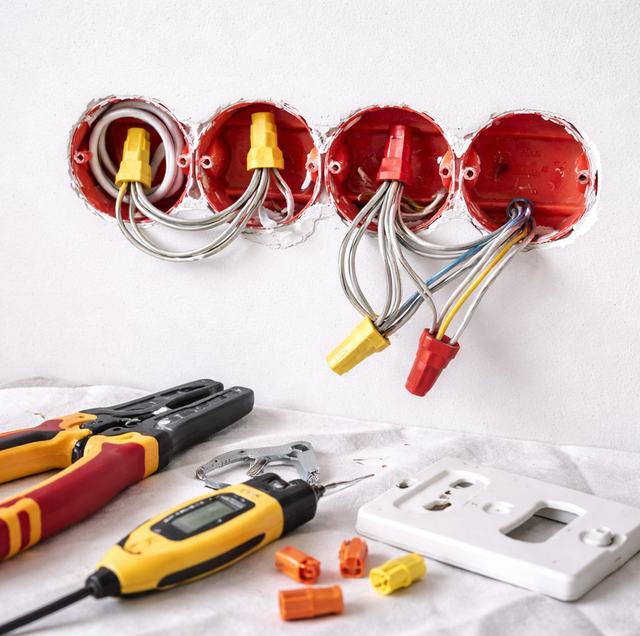
AlumiConn connectors: An AlumiConn connector is a small three-port block with set screws torqued to spec, with an antioxidant compound that keeps the aluminum from re-oxidizing at the joint. It transitions the aluminum to copper pigtails inside the box and is a widely used, code-recognized fix that more electricians can install.
A full or partial rewire: Replacing the aluminum branch circuits with copper is the most thorough option and is sometimes the practical choice during a remodel when walls are already open. It is the largest project of the three, but it removes the aluminum-connection issue entirely.
Which route fits depends on how many circuits are involved, how accessible the boxes are, and what other work is planned. A licensed electrician evaluates that and recommends the approach.
Why DIY Is Not An Option Here
It is tempting to think the fix is just tightening every screw or twisting on a new wire nut. It is not. Aluminum needs the correct connectors, the correct torque, and often an antioxidant compound; an ordinary wire nut or an over-tightened screw can make a connection worse, not better. The COPALUM system legally requires a certified installer and a specific tool. Beyond that, working inside a live panel or an outlet box carries shock and arc-flash risk that has no place in a homeowner's hands. Looking for the warning signs and reading a visible cable marking is the right level of involvement. Everything past that- opening covers, handling conductors, installing connectors- is licensed-electrician work.
Frequently Asked Questions
Some insurers will not write or renew a policy on a home with untreated aluminum branch wiring, and others charge more or require a licensed electrician's certification that AlumiConn or COPALUM repairs are in place. If you are buying, selling, or shopping policies, ask the carrier directly what documentation they want, because their requirements are often stricter than the minimum safety fix.
No. Devices carry a marking for what they may connect to. A device stamped only "CU" or with no aluminum rating is not made for direct aluminum contact. The ones rated for both are marked "CO/ALR" on outlets and switches, and even those are considered a partial measure compared with a COPALUM or AlumiConn repair. The rating stamp is on the device's metal strap, which is only visible once it is removed, so this is a detail your electrician checks, not you.
No, they are different eras and different failures. Knob-and-tube is older, from roughly the 1880s into the 1940s, uses individual copper conductors run through ceramic supports, and its main risks are brittle cloth insulation and no ground path. Aluminum branch wiring is a mid-century product whose failure mode is heat at loosening connections. A home can have one, the other, both, or neither.
It depends on the box count, but treating every device in an average home usually runs one to three working days because each outlet, switch, and junction box has to be opened and each connection remade individually. There is no shortcut that treats them in bulk, which is part of why the labor, not the connectors, drives the timeline.
No. Surge protection guards against voltage spikes, and even the newer arc-fault breakers watch the current on the circuit; none of them re-tightens or re-bonds a loose aluminum termination. Protective devices are a good layer to have, but they address a different failure than a degrading connection, so they are not a substitute for repairing the connections themselves.
It can. Because buyers, inspectors, and lenders flag it, homes with untreated aluminum branch wiring often draw repair requests or price adjustments at inspection. A dated receipt and certification for completed COPALUM or AlumiConn work usually clears the concern and travels with the home, so the paperwork is worth keeping in a safe place with your other closing documents.
Book an aluminum-wiring safety inspection — get a clear read on your connections and a plan that fits your home. Ridgeline Electric serves Santa Cruz and the surrounding area. Call (831) 206-5602.
