The power company shuts off the line two days before the wind even picks up, and the forecast shows gusts strong enough to snap a branch onto a wire. The refrigerator has maybe four hours of cold air left. The well pump won't run. The portable generator bought last year sits in the garage half-fueled, with nothing but an extension cord running from its outlet to a chest freezer. That cord keeps a few plugged-in items alive. It does nothing for the furnace fan, the garage door opener, or most of the circuits in the house. The question worth settling before the next outage, not during it, is whether a generator interlock kit changes that picture, and how it compares with the other ways a house keeps running when the grid goes dark.
What an Interlock Kit Actually Does
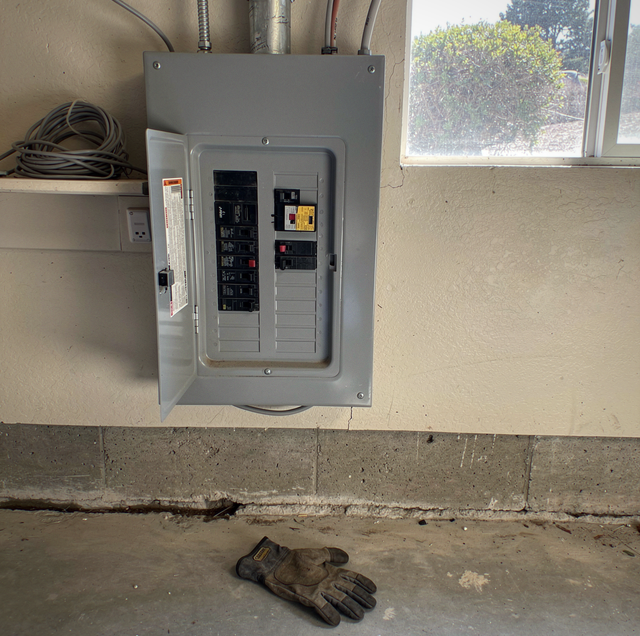
An interlock kit is a small metal or plastic plate mounted on the panel's dead front, positioned to physically block the main breaker and a generator breaker from being switched on simultaneously. To use it, you shut off the main breaker first, slide the interlock plate over, then switch on the generator breaker that feeds power from an outdoor inlet box. That mechanical block, not a warning label or a habit, is what makes the setup safe: it is physically impossible for utility power and generator power to feed the panel at once.
The generator itself connects through a weatherproof inlet mounted on the exterior wall, wired to a dedicated breaker sized to the inlet's rating (typically 30- or 50-amp, depending on the generator). From there, power reaches whichever breakers you choose to leave on: the refrigerator, a well or sump pump, select lighting circuits, the furnace blower. It is not a whole-home solution. It is a chosen slice of the panel, running on the output of a portable generator, kept isolated from the grid by a plate that permits only one power source at a time.
Comparing Your Backup Power Options
| Option | How power reaches the panel | Backfeed protection | What it can run |
|---|---|---|---|
| No backup (utility only) | Grid only | Not applicable | Nothing during an outage |
| Extension cord into an outlet | Cord to a single circuit | None; relies on the main breaker being off, which is easy to forget | One or two plugged-in devices |
| Cord backfed through a dryer outlet | Generator plugged into a 240V outlet, power flows backward through the panel | None built in; depends entirely on remembering to open the main | Several circuits, but with no mechanical safeguard |
| Interlock kit + portable generator | Dedicated inlet, routed through a breaker, mechanically blocked from overlapping with the main | Physical plate prevents simultaneous operation | A chosen set of circuits within the generator's output |
| Manual transfer switch + portable generator | Small secondary panel with its own switches for pre-selected circuits | Built into the switch design | Same idea as an interlock, packaged as a standalone panel |
The last two rows are the realistic choices for most homes relying on a portable generator. An interlock kit works inside the panel you already have; a manual transfer switch adds a small separate panel next to it with its own bank of switches for the circuits you picked ahead of time. Both block backfeed by design. The extension-cord methods above them do not, and the dryer-outlet method in particular shows up often enough after storms that it is worth naming directly: plugging a generator into a 240V outlet and letting it feed the whole panel through the wiring, without a plate or switch preventing overlap, is the single riskiest backup method in common use.
Why Backfeed Is the Real Danger
Backfeed happens when generator power flows the wrong direction through the panel and out onto the service line that normally brings power in. That line runs to a pole-mounted step-down unit that lowers utility voltage for residential use. Run the process in reverse, and that same step-down equipment pushes a generator's 240 volts back up, sometimes into the thousands of volts, onto the section of line a utility crew believes is dead. A lineworker restoring service after a storm has no way to see a live wire from a distance. This is exactly the scenario a Public Safety Power Shutoff is designed to prevent in the first place: utilities de-energize lines ahead of high fire-risk wind events so downed or damaged equipment cannot spark a fire. A homeowner's generator backfeeding onto that same line defeats the purpose of the shutoff and puts a repair crew at direct risk. An interlock kit or transfer switch eliminates the possibility entirely, because the two power sources can never be connected to the panel simultaneously.
Sizing the Generator Side of the Equation
A generator's rated wattage tells you less than it seems to. Refrigerators, well pumps, and furnace blowers all draw a brief surge, called locked-rotor or starting current, that can be two to three times their steady-state running wattage for the second or two it takes the motor to spin up. A generator sized only for the sum of everything's running watts can stall or trip its own breaker the moment a pump kicks on. Sizing correctly means adding up the running watts for everything you intend to power at once, then checking that the generator's surge rating comfortably covers the highest starting draw of any single item, since motors rarely start simultaneously in practice.
This is also why "essential circuits" gets defined narrowly. A typical interlock setup covers the refrigerator, a sump or well pump, a handful of lighting circuits, the furnace blower, and maybe the garage door opener, rather than the whole house. Central air conditioning, electric ranges, and electric water heaters draw enough that they usually stay off the generator-fed list unless the generator itself is sized well above what a typical portable unit provides.
The order circuits get switched on matters almost as much as the generator's total rating. Bringing every pre-selected breaker on at once asks the generator to absorb every appliance's starting surge in the same instant, which is a common way an undersized or even a properly sized unit stalls. Bringing circuits on one at a time, waiting a few seconds between each, lets the generator settle into a steady load before the next surge arrives. It is a small habit that makes the difference between a generator that carries the house through a multi-day outage and one that trips its own breaker on the first cold morning the furnace blower and the refrigerator's compressor both happen to start together.
What Installation Involves
Interlock kits are not universal. Each one is manufactured and UL-listed for a specific panel brand and model because the plate must match the physical layout of that panel's breaker slots and dead front exactly. A kit built for one manufacturer's panel will not fit or safely block another manufacturer's, so the panel model is identified before a kit is ordered.
The install itself adds a weatherproof inlet box on an exterior wall, wired back to a breaker positioned next to the main per the interlock's mechanical design, and typically calls for a permit and inspection since it is new circuit work tied directly into the service panel. In a marine or coastal air environment, that exterior inlet box benefits from a sealed, corrosion-resistant enclosure, since the same salt-laden moisture that pits outdoor panel enclosures over time will do the same to an inlet's contacts if it is not rated for the exposure. In seismic regions, the panel itself needs to stay securely fastened to the framing, since an interlock plate only works properly on a panel mounted as designed.
Once the inlet, breaker, and plate are in place, using the system in an actual outage is a short sequence: shut off the main, slide the interlock, switch on the generator breaker, then bring the pre-selected circuit breakers on one at a time so the generator isn't asked to start everything at once.
An interlock kit is not a bigger fix than the outage calls for, nor a smaller one than the risk warrants. It sits in the narrow, sensible middle: a mechanical safeguard that turns a portable generator from a backfeed hazard into a controlled, chosen slice of power, ready the next time the grid goes dark ahead of a storm.
Frequently Asked Questions
Usually not with a typical portable unit. A residential central AC compressor's locked-rotor starting draw commonly runs in the 15- to 20-plus-amp range at 240 volts, a multi-thousand-watt surge even though the running load afterward is a fraction of that. Some households add a soft-start (surge-reduction) device to the compressor itself to shrink that spike enough for a right-sized portable generator to carry, but without one, central air is commonly left off the essential-circuits list.
These shutoffs typically last from a day to several days, since utility crews often have to physically inspect every span of line in the de-energized area in daylight before restoring power, and a single storm can push that inspection window out further. A longer-than-expected outage window is one reason some households size their generators with headroom rather than the bare minimum.
Interlock kits are built around portable generators. A permanent standby generator, the kind that starts automatically and can carry the whole panel, uses an automatic transfer switch instead, which is a different piece of equipment entirely. Some households use an interlock and portable generator as a bridge solution now, then move to a standby system and automatic switch later.
It depends on the inlet's amperage rating: a 30-amp inlet is typically wired with 10-gauge conductors, while a 50-amp inlet steps up to 6-gauge, and either gauge may need to step up further if the run from the inlet to the panel is long, since voltage drop over distance is part of what an electrician checks before confirming wire size. The breaker at the panel matches the inlet's rating, and the final numbers get confirmed against the generator's actual output and the exact run length rather than assumed from a chart alone.
The kit itself is a listed part, but the connection point is inside a live service panel, and a kit that isn't matched exactly to that panel's model can look installed correctly while still failing to physically block the main and generator breakers from closing together, erasing the entire safety benefit without giving any obvious sign that it happened. Panel manufacturers publish model-specific compatibility lists for exactly this reason, and confirming a kit against that list, then de-energizing the panel correctly before making the connection, is licensed-electrician work.
It depends on whether the generator has a floating neutral or a bonded neutral, and that has to match how the service panel is set up. Getting this mismatched can cause nuisance GFCI trips on generator power or leave a ground path that doesn't behave the way it should, so it gets checked as part of the install rather than assumed from the generator's manual alone.
Schedule a generator interlock kit installation — get a mechanically safe way to run a portable generator through your existing panel before the next outage. Ridgeline Electric serves Santa Cruz and the surrounding area. Call (831) 206-5602.
