Need a 200-Amp Panel for an EV Charger and Heat Pump?
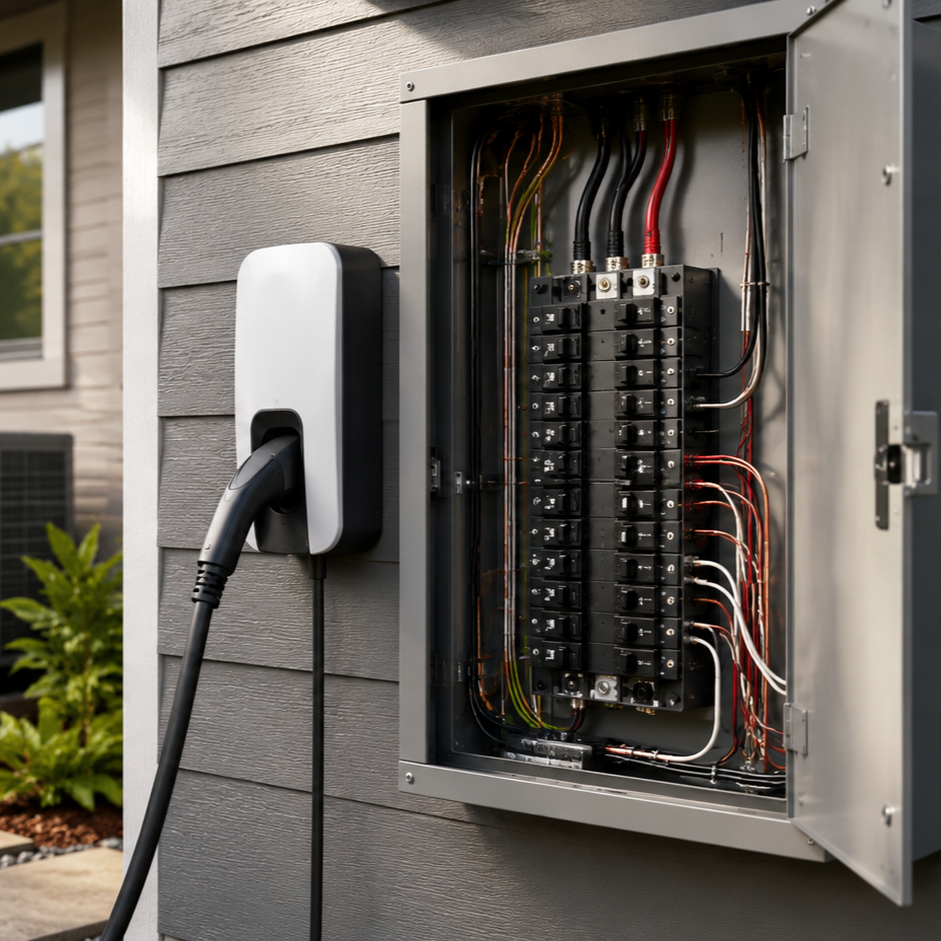
Quick Answer: Adding both an EV charger and a heat pump puts two large electrical loads on your home, and whether you need a 200-amp panel depends on your current service size and everything else your home draws. Both are significant, continuous loads, and together with central air, electric appliances, and the rest of the home, they can exceed the capacity of a 100-amp panel. Homes with 100-amp service often need an upgrade to 200 amps to add both safely, while a home already on 200-amp service may have room. The only reliable way to know is a load calculation by an electrician, which tallies your actual and planned loads against your panel's capacity.
Electrifying your home with an EV charger and a heat pump is increasingly popular, but both are big electrical loads, and a common question is whether your existing panel can handle them or whether you need to upgrade to 200-amp service. The honest answer depends on your specific home — but understanding how these loads add up, and how the decision is actually made, helps you plan.
Two Big Loads at Once
An EV charger and a heat pump are each substantial electrical loads on their own, and adding both at the same time is a meaningful increase in what your home demands. A Level 2 EV charger draws a large, continuous load while charging, and a heat pump — especially one heating and cooling the whole home — is also a significant ongoing load. Stack those on top of everything else your home already runs, and you can see why capacity becomes the question. It's not just whether your panel can power one of them, but whether it can handle both plus the rest of the house.
It's About Total Load, Not Just the Panel Size
The key concept is total electrical load: the sum of what all your major systems and appliances draw, accounting for what realistically runs simultaneously. Your panel's amperage rating is the ceiling on how much the home can draw at once. Adding an EV charger and a heat pump raises your total load substantially, and the question is whether that new total stays safely under your panel's capacity. A home with modest other loads might absorb the additions more easily than one already running central air, an electric range, an electric water heater, and more. So the answer isn't a simple yes or no — it depends on the whole picture.
| Your situation | Likely outcome |
|---|---|
| 100-amp panel, adding both | Often needs upgrade to 200 amps |
| 100-amp panel, already near capacity | Upgrade likely required |
| 200-amp panel, modest other loads | May have room for both |
| 200-amp panel, heavy existing loads | Needs a load calculation to confirm |
| Older/smaller service | Upgrade commonly needed |
Why 100-Amp Homes Often Need an Upgrade
Many homes, especially older ones, have 100-amp service. That was adequate for the loads of past decades, but adding two large modern loads like an EV charger and a heat pump frequently pushes a 100-amp panel beyond what it can safely supply, particularly alongside central air and electric appliances. In those cases, upgrading to 200-amp service roughly doubles the capacity and provides the headroom to run everything safely. This is a common scenario as households electrify: the panel that ran the home fine for years simply wasn't sized for EV charging and a heat pump on top of everything else.
When 200-Amp Service May Already Be Enough
If your home already has 200-amp service, you may have room to add both an EV charger and a heat pump — but it's not automatic. It depends on how much of that capacity your existing loads already use. A 200-amp home with relatively modest other demands likely has headroom, while one already running heavy electric loads might be closer to its limit than you'd expect. Even on a 200-amp service, the additions need to be checked against your actual usage rather than assumed to fit.
Plan both additions together rather than one at a time. If you know an EV charger and a heat pump are both coming, sizing the panel for both at once avoids upgrading, then discovering the second load doesn't fit and upgrading again. Planning for your full electrification goal up front is cheaper and cleaner than doing the work twice.
How the Decision Is Actually Made
The reliable way to answer whether you need a 200-amp panel is a load calculation performed by an electrician. This tallies your home's existing loads plus the planned EV charger and heat pump, and compares the total against your panel's capacity, to determine whether your current service can handle the additions or needs upgrading. It replaces guesswork with an actual answer based on your specific home. And because both adding these large circuits and upgrading a panel involve the home's main electrical service, this is work for a licensed electrician, properly permitted and inspected. An electrician can also advise on options like load management devices that, in some cases, allow large loads to share capacity intelligently.
Frequently Asked Questions
It depends on your current service size and total load. Both are large, continuous loads, and together with the rest of your home, they can exceed a 100-amp panel's capacity, so 100-amp homes often need an upgrade to 200 amps. A home already on 200-amp service may have room, depending on its other loads. A load calculation gives the definitive answer.
Through a load calculation by an electrician, which adds up your existing loads plus the planned EV charger and heat pump, and compares the total to your panel's capacity. This determines whether your current service can handle the additions or requires an upgrade. It's the reliable method, rather than guessing from your panel's size or age alone.
Because an EV charger and a heat pump are each large loads, adding both substantially increases your home's total demand at the same time. Either one alone might fit where both together don't. That's why the combined load — on top of everything else your home runs — is what determines whether your panel has enough capacity or needs an upgrade.
Often not for both, especially when paired with central air and electric appliances. A 100-amp panel was sized for the loads of past decades, and two large modern loads frequently push it beyond its safe capacity. Many 100-amp homes need an upgrade to 200-amp service to add both safely. A load calculation confirms whether yours can handle it.
Sometimes. In certain situations, load management devices can allow large loads, such as EV chargers, to share capacity intelligently, avoiding the need for upgrades in some cases. Whether that's an option for your home depends on your specific loads and panel. An electrician can assess whether load management or a panel upgrade is the right approach for your additions.
A licensed electrician. Both adding large dedicated circuits for an EV charger and heat pump and upgrading a panel involve the home's main electrical service, which must be done correctly, permitted, and inspected for safety. An electrician performs the load calculation, determines whether an upgrade is needed, and installs the work properly so the additions run safely.
Let a Load Calculation Decide
Adding an EV charger and a heat pump puts two big loads on your home, and whether you need a 200-amp panel comes down to your total load against your panel's capacity. Many 100-amp homes need the upgrade to add both safely, while some 200-amp homes already have room — but only a load calculation by an electrician tells you for sure. Plan both additions together, and let that calculation, not a guess, guide the decision. Sized right the first time, your electrified home runs both loads without nuisance trips or safety worries.
Planning an EV charger and a heat pump — Get a load calculation to find out whether your panel can handle them or needs an upgrade. Ridgeline Electric serves Santa Cruz and the surrounding area. Call (831) 206-5602.
