Bright Aisles Happy Forklifts
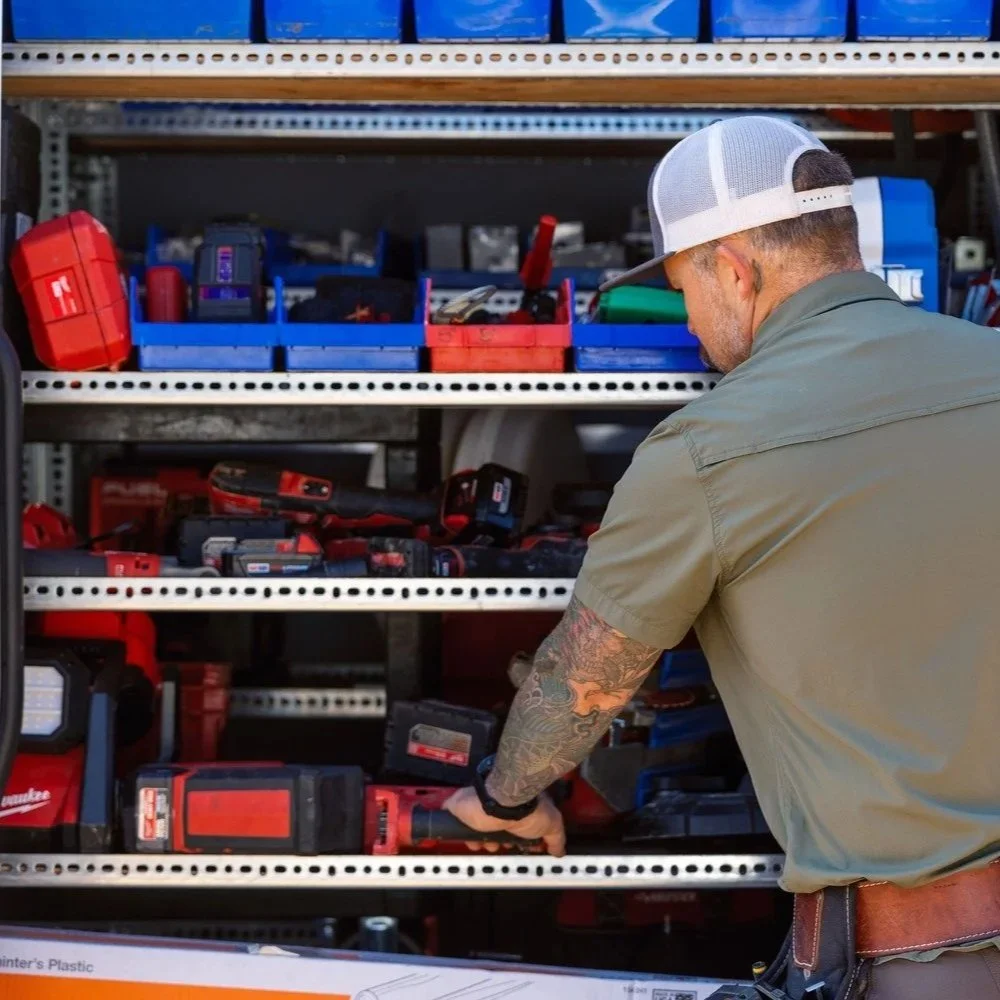
Warehouse lighting installation requires more than just installing a few fixtures.
Warehouses are more than storage units—they’re full-blown ecosystems. Pallets come and go, forklifts dart through aisles, and workers stay busy balancing speed with accuracy. Lighting needs to keep up. Poorly lit zones turn into hazards, and no one wants mystery boxes hiding in the shadows.
Warehouse lighting installation requires more than just installing a few fixtures. It takes planning, precision, and an understanding of how warehouses actually operate. Every bay, aisle, dock, and rack deserves lighting that matches the pace and purpose of the work below.
High Ceilings Call for High Strategy
Not every building boasts 30-foot ceilings—and those that do present a unique challenge. Standard bulbs won’t make a dent. Industrial spaces require high-output light fixtures that penetrate open air and provide consistent coverage, even when mounted high overhead.
Lighting professionals select fixtures based on their mounting height, beam spread, and the requirements of the task area. Wide-angle fixtures for open spaces. Narrower beams for high racks. LED high bays that sip energy but still shine like a midsummer day. Every choice plays into visibility, safety, and performance.
Because when inventory lives twenty feet in the air, guesswork has no place in the lift plan.
More Light, Less Waste
Nobody’s arguing against brightness—but warehouses don’t need to light up the following zip code. Efficient lighting installation strikes the perfect balance between lumens and logic. It lights what’s needed, when it’s needed, and skips the rest.
Professionals map out zones and install lighting controls that divide the warehouse into smart sections. Motion sensors detect activity. Timers dim lights during off-hours. Daylight harvesting takes over near skylights. The result? A setup that keeps the electric bill in check without compromising visibility.
Because a smarter warehouse is a brighter one—literally and financially.
Color Matters to More Than Painters
The color temperature of lighting affects more than just Instagram photos. It impacts visibility, alertness, and even perceived cleanliness. Warehouses benefit from cool white lighting in the 4000K to 5000K range. It mimics daylight, sharpens shadows, and reduces eye strain during long shifts.
Professional electricians assist warehouse managers in selecting the optimal light temperature for each area of the operation. Cool white above loading docks—neutral tones in packing zones. Warmer tones reserved for office cubicles, not forklifts. Every light is a choice that affects both mood and motion.
Say Goodbye to Flicker Fatigue
Fluorescent tubes might still be hanging in older warehouses, but their time in the spotlight has passed. They flicker. They hum. They fail in patches. And when they do, productivity takes a hit.
LED upgrades offer instant-on performance, no warm-up lag, and no maddening flickers. Professional installers replace outdated fixtures with modern LED units that last for years and remain consistent from the first hour of use to the 50,000th.
Lighting should never play tricks on the eyes or distract the team. Forklift drivers need a clear view of their path—not a strobe show on the concrete.
Wiring That Knows the Warehouse Map
Running power to lights in a warehouse means thinking vertically, horizontally, and sometimes diagonally. Conduits snake through rafters. Junction boxes hang in midair. Drops run down to controls. It’s a three-dimensional puzzle with consequences.
Professional electricians wire lighting with an eye for durability and safety. They secure conduits to prevent vibration, use weatherproof components near loading bays, and route lines away from high-traffic zones. The result is a clean, efficient system that doesn’t interrupt operations—or create trip hazards during peak hours.
Because in a warehouse, every inch of space is spoken for.
Emergency Lights That Don’t Miss a Beat
When the power cuts out, warehouse operations don’t get a grace period. Exit paths need instant lighting, and emergency routes must stay visible. That’s where professional installation makes the difference.
Electricians install battery-backed emergency lights and exit signs that activate without delay. They tie them into the appropriate circuits, test every unit for runtime, and locate each fixture where it truly matters—not just where it’s convenient.
There’s no room for guesswork when forklifts, heavy loads, and tight corners all share a darkened space.
Controls That Don’t Require a Tech Degree
Lighting systems have come a long way, but that doesn’t mean warehouse staff should need an IT degree to operate them. Professional installers set up user-friendly control panels, intuitive switches, and pre-programmed schedules tailored to each shift.
Some setups feature tablet-based controls. Others use hardwired wall-mounted panels with simple labels. Either way, the lighting system shouldn’t feel like it belongs in a sci-fi movie. It should work right out of the box, and professionals make sure it does.
When operators can adjust the lights without calling for backup, the system becomes an asset—not a mystery.
Sustainability With Every Switch
LED warehouse lighting doesn’t just shine brighter—it supports energy-saving goals in measurable ways. It reduces HVAC load by giving off less heat, slashes power usage, and meets building efficiency codes with ease.
Professionals help warehouse managers understand utility rebates, code compliance, and long-term ROI. They handle permits, recommend lighting brands with proven records, and configure systems to meet LEED standards when needed.
Warehouses seeking to reduce costs and minimize their footprint don’t have to compromise on light quality in the process. Sustainability and clarity go hand in hand.
Lighting That Loves the Workflow
A warehouse isn’t just a grid. It’s an organized chaos of fast movement, repetitive tasks, and high expectations. Lighting must follow the flow—never block it. Professionals install fixtures that don’t cast awkward shadows on picking areas or blind drivers coming around corners.
They consider reflectivity from racking, identify hotspots where additional fixtures may be needed, and avoid glare by selecting diffused lenses when working above reflective surfaces, such as shrink wrap or polished flooring.
Every fixture contributes to safety, morale, and productivity. The forklift operators notice when they no longer have to guess which pallet row they’re turning into.
Upgrades Without the Downtime
Professional lighting installation means minimizing interruptions to daily operations. Electricians coordinate with warehouse managers to schedule work during off-hours, isolate work zones, and install with minimal disruption.
They know that a single missed order or blocked path can throw off logistics for hours. That’s why temporary lighting is installed first, noisy work is kept on a tight schedule, and cleanup occurs before the first shift returns.
It’s not just an upgrade—it’s a performance that respects the rhythm of the warehouse.
More Than Aesthetic—It’s Strategic
Lighting in a warehouse is more than a finishing touch. It’s part of the foundation. It affects how fast teams work, how accurately they pick, and how safely they move. It touches every product, every pallet, and every corner of the building.
And when professionals do it, lighting becomes an invisible partner in the daily hustle. It doesn’t flicker, fail, or confuse. It works in the background—quietly, brightly, and reliably.
Forklifts run smoothly. Teams move faster. Managers stop worrying about burnt-out bulbs and start focusing on what really matters: keeping operations running smoothly and customers satisfied.
Because in a warehouse full of motion, light should never be the thing holding things back.
Ridgeline Electric is a trusted local electrical contractor providing electrical inspections & code corrections, ceiling fan & light fixture installation, outdoor & landscape lighting services, and commercial electrical services across Santa Cruz County. As a licensed electrician, we ensure to meet the highest industry standards and guarantee 100% customer satisfaction. Book your service appointment today.
