Tesla Wall Connector vs Universal Level 2 Charger: Which?
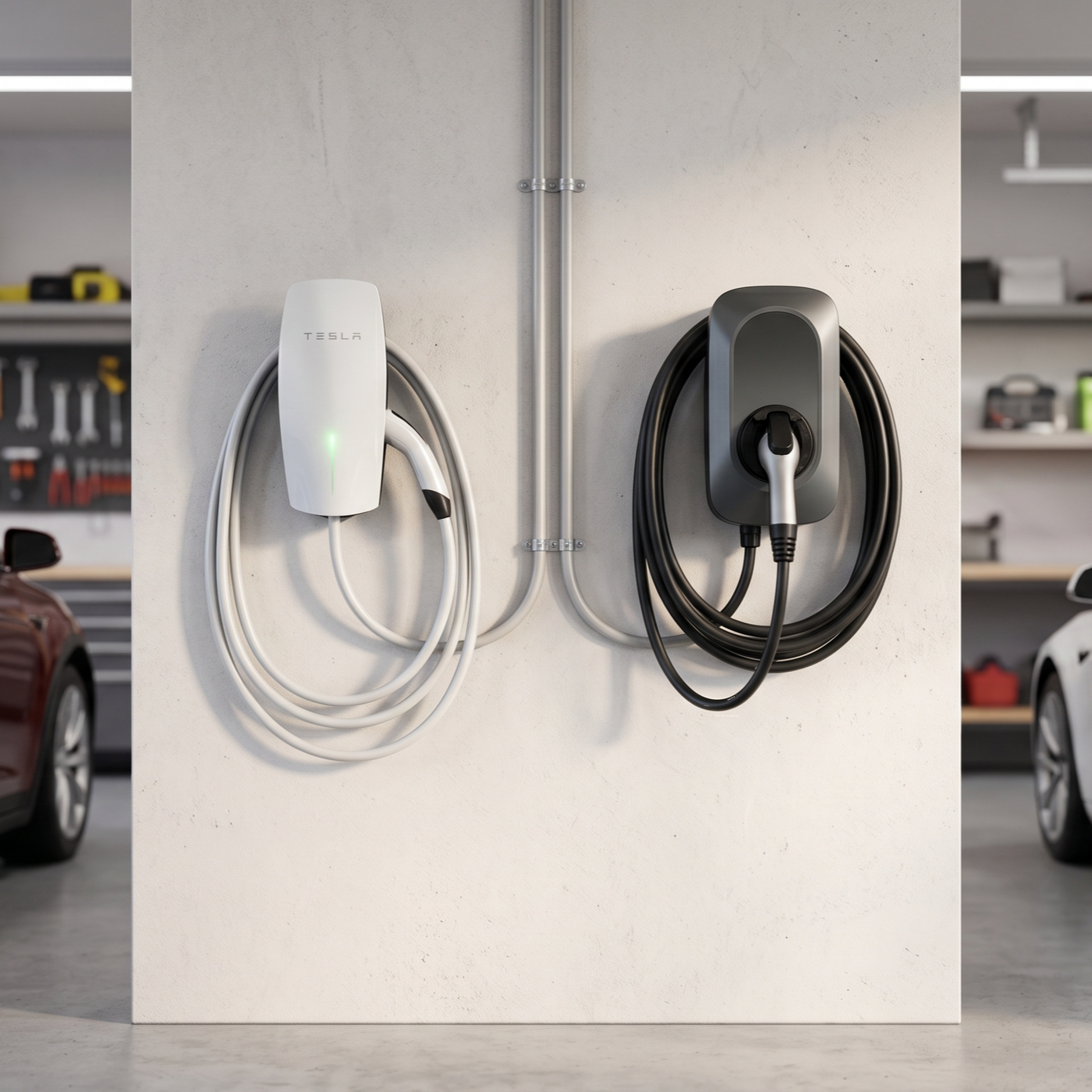
Quick Answer: The choice between a Tesla Wall Connector and a universal Level 2 charger mostly comes down to which vehicles you need to charge, now and in the future. The Tesla Wall Connector uses Tesla's connector and is optimized for Tesla vehicles, offering a clean, integrated experience for a Tesla household. A universal Level 2 charger uses the standard connector that works with virtually all non-Tesla EVs (and Teslas with an adapter), making it the more flexible choice if you have or might have different brands. Both deliver fast Level 2 home charging. Consider your current and likely future vehicles, the need for adapters, and features, then have either installed on a proper dedicated circuit by an electrician.
When setting up home EV charging, one common decision is between a Tesla Wall Connector and a universal Level 2 charger. Both provide fast home charging, but they differ in compatibility and flexibility, and the right pick depends largely on what you drive — and what you might drive down the road. Here's how to think it through.
The Core Difference: Connector and Compatibility
The fundamental distinction is the connector and which vehicles it natively serves. The Tesla Wall Connector uses Tesla's connector and is designed around Tesla vehicles, providing a seamless, integrated charging experience for Tesla owners. A universal Level 2 charger uses the standard connector that the broad EV market uses, making it compatible with virtually all non-Tesla electric vehicles out of the box.
Importantly, compatibility can bridge both ways with adapters: a Tesla can typically charge from a universal charger using an adapter, and the mix of connectors and adapters continues to evolve as the industry standardizes. But the cleanest, no-adapter experience comes from matching the charger to your vehicle.
If You're a Tesla Household
If you drive a Tesla and expect to stay with Tesla, the Tesla Wall Connector is a natural fit. It's built for the vehicle, offers a tidy integrated experience, and avoids needing an adapter for daily charging. For a household with all-Tesla vehicles, the Wall Connector keeps things simple and consistent. The main consideration is flexibility: if a non-Tesla EV might join the household later, you'd want to think about how it would charge, though adapters and evolving standards provide paths for that.
If You Have Mixed or Non-Tesla Vehicles
If you drive a non-Tesla EV or have multiple EVs of different brands, a universal Level 2 charger is generally the more flexible choice. It uses the standard connector that works with a broad range of EVs, so it can charge different vehicles without being tied to one brand's ecosystem. For a household with mixed brands, or one that wants to be ready for whatever EV comes next, the universal charger's brand-agnostic compatibility is its biggest advantage. A Tesla in the mix can usually charge from it with an adapter.
| Consideration | Tesla Wall Connector | Universal Level 2 Charger |
|---|---|---|
| Best for | All-Tesla households | Non-Tesla or mixed-brand households |
| Connector | Tesla connector | Standard connector |
| Adapter needed | Not for Teslas | Adapter for Teslas |
| Flexibility | Optimized for Tesla | Works across most EVs |
| Future-proofing | Great if staying Tesla | Strong for changing vehicles |
Beyond Compatibility: Features and Speed
Both options deliver fast Level 2 charging, and the actual charging speed at home depends on the charger's amperage and your vehicle's onboard capabilities, as well as your electrical setup. Beyond compatibility, chargers can differ in features like connectivity, app control, scheduling, power sharing between multiple chargers, and weather resistance for outdoor installation. When comparing specific models, those features and the charger's power rating are worth weighing alongside compatibility. But for most households, the brand-compatibility question is the starting point, and features refine the choice from there. It also helps to think about where the charger will live and how you'll use it day to day. An outdoor installation calls for a weather-rated unit, the cable needs to comfortably reach your vehicle's charge port, and features like scheduling can let you charge during off-peak hours automatically. None of these changes the basic compatibility decision, but they shape which specific model serves you best once you've settled on the Tesla unit or a universal charger for your driveway.
Think a few years ahead, not just about today's car. EVs change hands, and households add vehicles. If there's any chance a different brand will join your driveway, the universal charger's broad compatibility is valuable insurance. If you're committed to Tesla, the Wall Connector's integrated fit is hard to beat.
Don't Forget the Installation
Whichever charger you choose, the installation is just as important as the unit. A Level 2 charger requires a dedicated circuit sized for its load, run from your electrical panel, and, depending on your panel's available capacity, adding it may require a panel evaluation or upgrade to handle the continuous draw safely. An electrician determines whether your service can support the charger, installs the dedicated circuit and the charger correctly, and ensures the work is permitted and inspected. Because an EV charger is a substantial, continuous load, proper installation matters for safety and reliable charging — regardless of which charger you pick.
Frequently Asked Questions
It depends mainly on your vehicles. If your household is all Tesla and likely to stay that way, the Tesla Wall Connector offers a clean, integrated fit. If you have a non-Tesla EV or mixed brands, a universal Level 2 charger is more flexible, using the standard connector that works across most EVs. Your current and likely future vehicles drive the choice.
Yes, typically with an adapter. A Tesla can usually charge from a universal charger that uses the standard connector by using the appropriate adapter. This is part of why a universal charger is a flexible choice — it can serve a Tesla with an adapter while natively charging non-Tesla EVs. Connector and adapter options also continue to evolve toward standardization.
Both deliver fast Level 2 charging, and the actual speed depends on the charger's amperage, your vehicle's onboard charging capability, and your electrical setup, rather than simply the brand. Neither is inherently faster by virtue of being Tesla or universal. When comparing specific models, the power rating and your vehicle's limits determine the real-world charging speed.
For a household whose vehicles might change brands, yes — its standard connector works across most EVs, so it isn't tied to one brand's ecosystem. If you're committed to staying with Tesla, the Wall Connector remains a great fit. Future-proofing depends on your plans: universal favors flexibility, while the Tesla unit favors an all-Tesla household.
Yes. Both a Tesla Wall Connector and a universal Level 2 charger require a dedicated circuit sized for the charger's load, run from your electrical panel. Depending on your panel's capacity, adding one may also require a panel evaluation or upgrade. Either way, it's significant electrical work that an electrician should install, permit, and inspect.
It depends on your panel's available capacity. An EV charger is a large, continuous load, and if your service is near its limit, you may need a panel evaluation or upgrade to add it safely — especially alongside other large loads. An electrician checks your capacity first and advises whether your existing panel can handle the charger or needs upgrading.
Match the Charger to Your Driveway
Choosing between a Tesla Wall Connector and a universal Level 2 charger mostly comes down to your vehicles: the Tesla unit is a clean fit for an all-Tesla household, while a universal charger offers broad, brand-agnostic flexibility for non-Tesla or mixed driveways. Both charge fast, so weigh compatibility first, then features. Get the vehicle question right, and the rest of the decision falls into place. Whichever you choose, have it installed on a proper dedicated circuit by an electrician for safe, reliable charging.
Deciding on a home EV charger — Get help choosing the right unit and have it installed on a safe, dedicated circuit. Ridgeline Electric serves Santa Cruz and the surrounding area. Call (831) 206-5602.
