Is Your Electrical Panel Too Old to Be Safe? How to Tell
Quick Answer: Signs an electrical panel may be too old or unsafe include having a fuse box instead of breakers, being a known problematic brand or type from past decades, frequent breaker trips, a panel that's warm to the touch or buzzing, scorch marks, burning smells, rust or corrosion inside, and simply being undersized for a modern home's loads. Age alone isn't automatically dangerous, but older panels can lack capacity, have worn or failure-prone components, and in some cases be known hazards. If your panel shows these signs — especially heat, burning smells, or a known problem type — it should be evaluated promptly, as some of these are genuine safety risks.
Your electrical panel quietly does a critical job, and when it's old, it can become a safety concern rather than just an outdated box. The tricky part is that age alone doesn't automatically mean danger — but older panels are more likely to be undersized, worn, or in some cases known hazards. Knowing the warning signs helps you tell a panel that's simply old from one that's genuinely unsafe.
Why Old Panels Can Become a Concern
An electrical panel ages like anything else: components wear out, connections can loosen, and designs that were standard decades ago may not meet today's capacity or safety expectations. On top of that, a few specific panel types and brands from past eras have become known for reliability or safety problems. So "too old to be safe" can mean a few different things — outdated and undersized, worn and deteriorating, or a known problematic type. The signs below help identify which situation your panel may be in.
Sign One: It's a Fuse Box
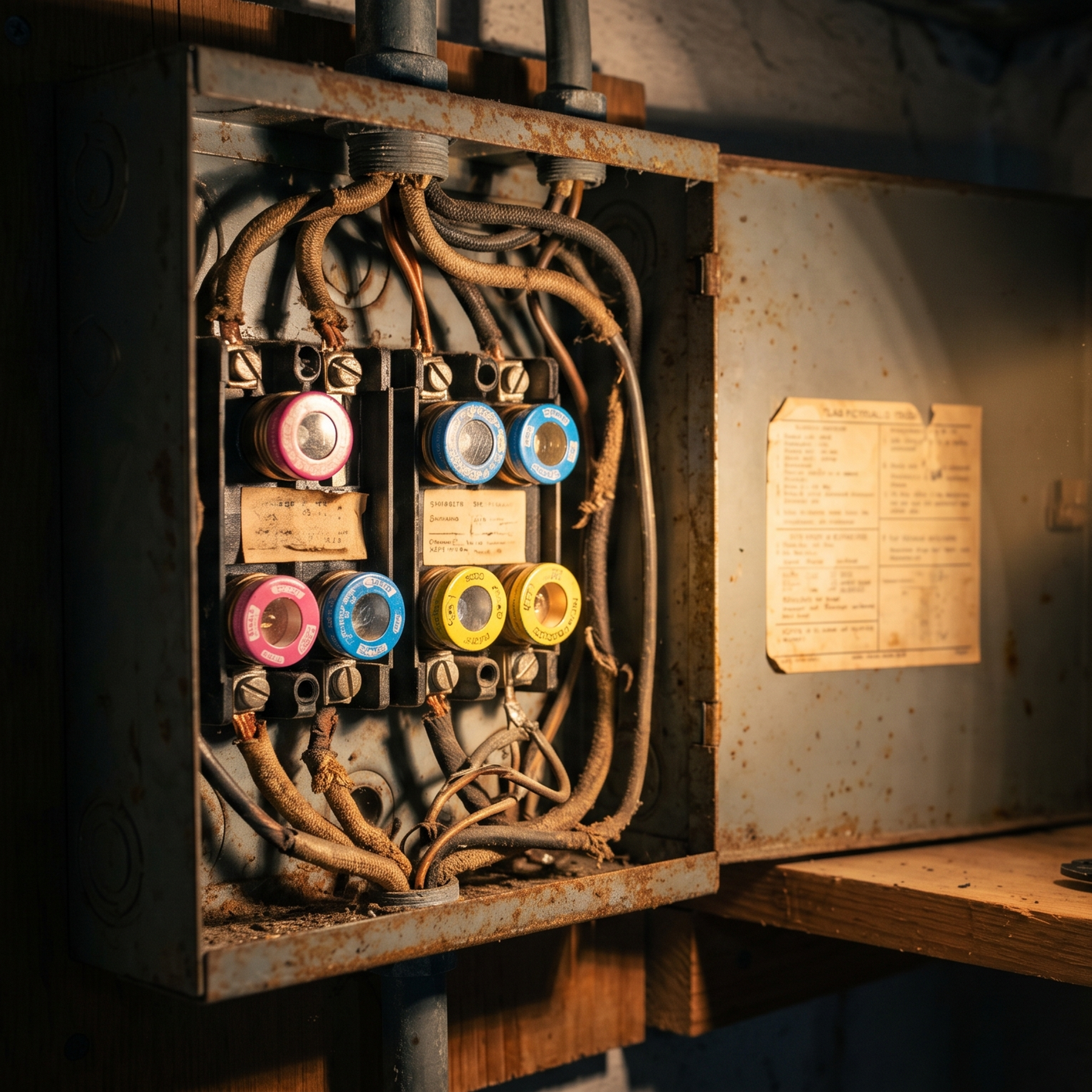
If your home still has a fuse box rather than a panel with circuit breakers, that's a strong indicator of an older electrical system. Fuse boxes were standard long ago and aren't inherently lethal, but they often signal a system that predates modern demands and protections, and they can be undersized for today's loads. A fuse box is a clear sign that the electrical service is dated and worth having evaluated for both capacity and safety.
Sign Two: It's a Known Problematic Type
Some electrical panels from certain decades and brands have developed reputations for reliability or for safety concerns — issues like breakers that may not trip when they should. Because the panel is the home's primary safety device, a known problematic type is a particular concern, and these are frequently flagged during home inspections and recommended for replacement. If you're unsure what type you have, that's exactly the kind of thing an electrician or inspection can identify.
| Sign | What it indicates |
|---|---|
| Fuse box instead of breakers | Older, possibly undersized system |
| Known problematic panel type | Potential reliability/safety concern |
| Frequent breaker trips | Overloaded or aging panel |
| Warm panel, buzzing, burning smell | Possible serious fault — urgent |
| Scorch marks or melted parts | Overheating — urgent |
| Rust or corrosion inside | Moisture damage, deterioration |
Sign Three: Heat, Buzzing, or Burning Smells
Some signs are urgent regardless of the panel's age. A panel or breakers that feel warm to the touch, a buzzing or crackling sound, scorch marks or melted components, or any burning smell point to a serious problem — loose connections, overloading, or failing parts that are overheating. These are immediate safety concerns with real fire risk, not things to monitor. A panel showing any of these should be treated as urgent and inspected promptly.
Sign Four: Trips, Corrosion, and Undersizing
Other signs point to a panel that's aging or outgrown. Frequent breaker trips suggest the panel or circuits are overloaded, common when an older, smaller panel meets modern demands. Rust or corrosion inside the panel indicates moisture intrusion and deterioration. And a panel that simply can't keep up — too few circuits, no room to add any, struggling with today's appliances and electronics — is undersized for a modern home. None of these alone may be an emergency, but together with age, they make a strong case for evaluation and likely replacement.
A warm panel, buzzing or crackling, scorch marks, melted components, or a burning smell are signs of a potentially serious fault with real fire risk. Don't keep using or adding to a panel showing these signs. Have an electrician inspect it promptly — these conditions are urgent regardless of how old the panel is.
Why It's Worth Addressing
An old or unsafe panel is more than an inconvenience — it is the heart of your home's electrical safety. An undersized panel falls further behind as you add modern loads; worn or loose connections can overheat, and a known problematic type may not protect as it should. Replacing an outdated or hazardous panel with a modern, properly sized one restores reliable power, removes the safety risk, and provides capacity for today's electrical demands. Catching the signs early means handling them on your terms rather than after a failure. An electrician can evaluate the panel's age, type, and condition and recommend whether it needs replacement.
Frequently Asked Questions
Look for signs such as a fuse box rather than breakers, a known problematic panel brand or type, frequent breaker trips, rust or corrosion inside, and an inability to keep up with modern loads. Urgent signs include a warm panel, buzzing, scorch marks, or burning smells. Age alone isn't automatically dangerous, but these signs indicate a panel that should be evaluated.
A fuse box isn't inherently lethal, but it signals an older electrical system that may be undersized for modern demands and predate current protections. Fuse boxes were standard long ago, and a home still using one likely has dated service worth evaluating for both capacity and safety. Many are replaced with modern breaker panels during electrical upgrades.
Yes. Certain panels from past decades and brands have developed reputations for reliability or safety concerns, such as breakers that may not trip reliably when needed. Because the panel is the home's primary safety device, these known problematic types are a real concern and are often flagged in home inspections and recommended for replacement. An electrician can identify whether you have one.
A panel or breakers that are warm to the touch, buzzing or crackling sounds, scorch marks, melted components, or any burning smell are urgent. These indicate a serious fault — loose connections, overloading, or failing parts overheating — with real fire risk. Stop using or adding to the panel and have it inspected promptly, regardless of the panel's age.
Not automatically — age alone isn't necessarily dangerous. But older panels are more likely to be undersized, have worn components, or be a known problematic type. If an old panel also shows warning signs like frequent trips, corrosion, heat, or an inability to keep up with your loads, replacement is often warranted. An electrician can assess whether yours needs replacing.
Often not well. Older and smaller panels were sized for the loads of their era, and modern appliances, electronics, and especially EV charging or heat pumps can exceed their capacity. Frequent trips and no room to add circuits are signs of this. Adding major modern loads usually calls for evaluating whether the panel needs upgrading to handle the demand safely.
Tell Old From Unsafe
An old electrical panel isn't automatically dangerous, but a fuse box, a known problematic type, frequent trips, corrosion, or — most urgently — heat, buzzing, scorch marks, or burning smells all signal a panel that may be unsafe. Because the panel is the heart of your home's electrical safety, these signs are worth acting on, especially the urgent ones. Have an aging or suspect panel evaluated, and replace it before an outdated box becomes a real hazard.
Worried your electrical panel is too old to be safe? — Get it evaluated for age, type, and condition and find out if it needs replacing. Ridgeline Electric serves Santa Cruz and the surrounding area. Call (831) 206-5602.
